SCGOP Call to Convention: Bread and Circuses
Saturday's special convention of the South Carolina Republican Party was called under the banner of closing our Republican primaries and providing a legal reason to compel the state legislature to do so.
The day’s deliberations were to be followed by a “Unity BBQ,” a perhaps intentional carrot to be dangled to keep the proceedings as uninterrupted as possible.
After watching the proceedings unfold, it became increasingly clear that the true priority was not simply closing the primaries - it was consolidating control over who is permitted to run as a Republican.
Had this convention truly been about closing the primaries, delegates could have voted on that issue alone. Instead, party leadership repeatedly intertwined it with a candidate qualifications provision, insisting the two were inseparable.
That theme was evident from the very beginning.
Standing rule changes for the convention were not provided to delegates for consideration in advance, and the new convention rules added a line item that prevented the two issues from being split and voted on separately without a 75% majority vote. That is unheard of.
Debate was attempted, and quickly shouted down. Because, barbecue.
Another point of contention, prior to the debate on the substance of the meeting, was the SCGOP's divergence from their own rules. This isn't the first time.
The convention was called for the middle of the summer on short notice, directly after elections. A time where elected delegates had many other things to do.
In an apparent attempt to ensure that the numbers were there, new delegates, who had not previously been elected at their county's convention, were permitted. This is a direct violation to the SCGOP rules regarding delegate qualifications.
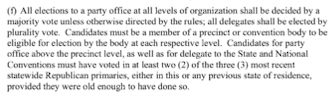
The new delegates were told that as long as they had voted in the 2024 primary, they were eligible. However, this contradicts SCGOP rule 2(f) in two ways:
𝟏) 𝐃𝐞𝐥𝐞𝐠𝐚𝐭𝐞𝐬 𝐦𝐮𝐬𝐭 𝐛𝐞 𝐄𝐋𝐄𝐂𝐓𝐄𝐃 𝐚𝐭 𝐭𝐡𝐞𝐢𝐫 𝐜𝐨𝐮𝐧𝐭𝐲 𝐜𝐨𝐧𝐯𝐞𝐧𝐭𝐢𝐨𝐧. 𝐓𝐡𝐞𝐫𝐞 𝐰𝐞𝐫𝐞 𝐦𝐚𝐧𝐲 𝐩𝐫𝐞𝐬𝐞𝐧𝐭 𝐨𝐧 𝐒𝐚𝐭𝐮𝐫𝐝𝐚𝐲 𝐰𝐡𝐨 𝐝𝐢𝐝 𝐧𝐨𝐭 𝐩𝐚𝐫𝐭𝐢𝐜𝐢𝐩𝐚𝐭𝐞 𝐢𝐧 𝐭𝐡𝐞 𝟐𝟎𝟐𝟓 𝐑𝐞𝐎𝐫𝐠. 𝐓𝐡𝐞𝐲 𝐰𝐞𝐫𝐞 𝐧𝐨𝐭 𝐞𝐥𝐞𝐜𝐭𝐞𝐝.
𝟐) 𝐃𝐞𝐥𝐞𝐠𝐚𝐭𝐞𝐬 𝐦𝐮𝐬𝐭 𝐡𝐚𝐯𝐞 𝐯𝐨𝐭𝐞𝐝 𝐢𝐧 𝐭𝐰𝐨 𝐨𝐟 𝐭𝐡𝐞 𝐩𝐚𝐬𝐭 𝐭𝐡𝐫𝐞𝐞 𝐑𝐞𝐩𝐮𝐛𝐥𝐢𝐜𝐚𝐧 𝐩𝐫𝐢𝐦𝐚𝐫𝐢𝐞𝐬. 𝐓𝐇𝐀𝐓 𝐢𝐬 𝐭𝐡𝐞 𝐫𝐞𝐪𝐮𝐢𝐫𝐞𝐦𝐞𝐧𝐭, 𝐧𝐨𝐭 𝐡𝐚𝐯𝐢𝐧𝐠 𝐬𝐢𝐦𝐩𝐥𝐲 𝐯𝐨𝐭𝐞𝐝 𝐢𝐧 𝐭𝐡𝐞 𝟐𝟎𝟐𝟒 𝐩𝐫𝐢𝐦𝐚𝐫𝐲.
The credentialing that was allowed would seem to make the special convention illegitimate.
Attempts were made to question the legitimacy of those credentialing, but were ruled out of order and shouted down.
Barbecue, people.
Following several lengthy lectures by Drew McKissick et al gaslighting the congregation to believe that closed primaries cannot happen without candidate qualifications, business finally commenced.
After several county delegates and ECs took the stand to ask questions and express apprehension, Lexington County delegate Preston Baines took the microphone and thoughtfully articulated the concerns shared by many Republicans across the state. He offered an amendment that would remove the candidate qualification portion of the new rule. That portion requires candidates in Republican primaries to have participated in 2/3 primaries and have been a registered Republican for the past 90 days.
What happened next was telling.
Although Lexington County First Vice Chairwoman Debbie Heim had remained silent throughout the convention, she immediately rose, moved to the front of the line of speakers, identified herself to the body by her party title, and delivered a speech opposing Preston’s position and defending candidate qualifications.
It’s worth nothing that this is the same Lexington County officer who previously stated that, in her “perfect world,” prospective Republican candidates should have to go through county party leadership before being qualified to run.
What was disappointing was seeing county party leadership use its position to publicly counter one of its own delegates while presenting its preferred position as though it reflected the consensus of Lexington County Republicans, despite the fact that most of our members and ECs had expressed significant reservations about the proposal.
One of the convention’s most revealing moments came when Pickens County delegate Justin Alexander offered what many would consider a straightforward compromise. He proposed that any candidate qualifications provision should, at a minimum, require candidates seeking the Republican nomination to affirm that they would protect innocent human life - a principle explicitly reflected in the South Carolina Republican Party platform.
His reasoning was simple: if the purpose of candidate qualifications is to ensure Republican candidates actually represent our party principles, then protecting the party’s pro-life platform should be among the most fundamental qualifications.
Despite a few claps, the resounding silence from the convention floor was deafening. The amendment received little support and ultimately failed.
It was clear we were too close to barbecue hour for such nonsense as protecting the unborn.
However, that moment raises an uncomfortable question:
If requiring Republican candidates to affirm the Republican Party’s commitment to protecting innocent life cannot even generate meaningful support at a Republican convention, then what exactly is the purpose of granting party leadership greater authority over who may run?
Throughout the remainder of the debate over the new rules, delegates from multiple counties continued offering amendments and raising concerns. Many struggled to be fairly recognized, were ruled out of order, or were drowned out by increasingly impatient calls to move on due to the BBQ hour and their scheduled “tee times.”
Finally, the convention was recessed and off the crowd went to eat their pork, unified.
Unity is a worthy goal.
But unity is not achieved by limiting debate, ruling procedural questions out of order, discouraging amendments, or expecting delegates to quietly accept sweeping changes without meaningful discussion.
Ultimately, Saturday’s convention did not convince many Republicans that closing the primaries requires greater control over candidates.
Rather, it became clear that SCGOP leadership is more interested in controlling Republicans than representing them.
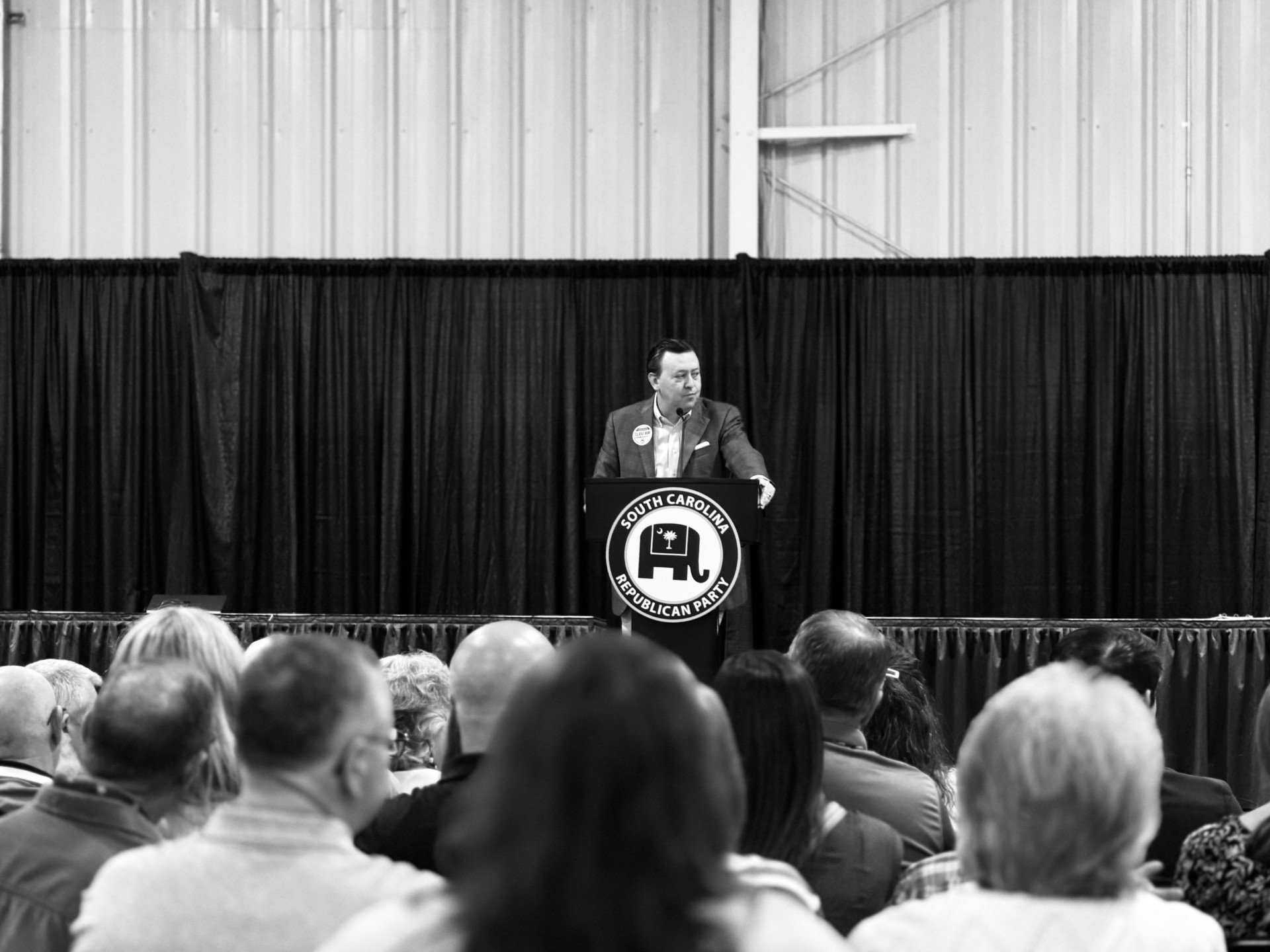
South Carolina Republican Party Chairman Drew McKissick addresses convention attendees.